Tag: fisheries

  • Strategic Development in East Lombok: A Vision for Economic Growth

    Strategic Development in East Lombok: A Vision for Economic Growth

    East Lombok’s Vital Role in NTB’s Development

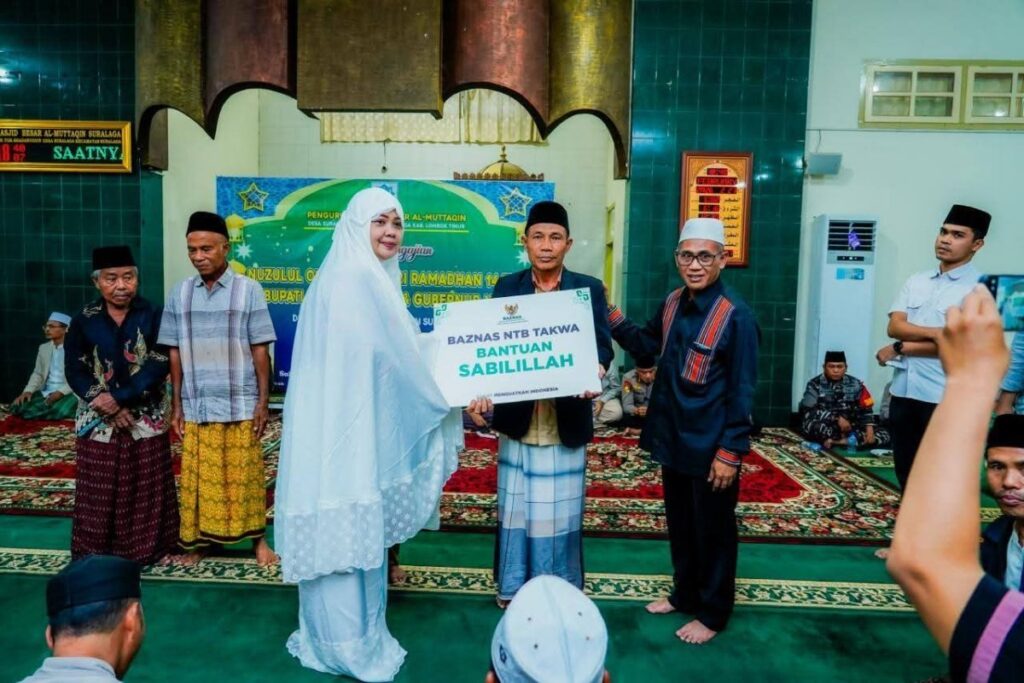
    Lombok Zone – The Governor of West Nusa Tenggara (NTB), Lalu Muhamad Iqbal, recently emphasized the strategic importance of East Lombok in the provincial development agenda. With a population nearing 1.5 million, representing almost a quarter of NTB’s total population of 5.7 million, East Lombok is seen as a crucial player in accelerating regional economic growth. This statement was made during the Ramadan Safari event at Al-Muttaqin Mosque in Suralaga, East Lombok, on Friday, February 27.

    Governor Iqbal pointed out that East Lombok boasts diverse geographical features, from mountainous areas to coastal regions, rich in agricultural and fisheries potential. Over the next four to five years, these resources will be systematically developed to ensure that East Lombok gains wider recognition, alongside significant advancements in local prosperity.

    Infrastructure and Educational Initiatives

    “If a majority of East Lombok’s residents are economically productive and robust, the regional and provincial income will rise significantly,” stated Governor Iqbal. A key focus since the onset of development has been the improvement of infrastructure, particularly the crucial roads that have remained neglected for 11 years, with repairs scheduled to start in 2025. Adequate infrastructure is viewed as the foundation for harnessing the region’s full potential.

    In the education sector, the construction of schools, including religious and vocational institutions, is ramping up. East Lombok is recognized as one of the regions with the highest number of educational establishments in NTB. Additionally, the government is implementing the Fisherman Village program aimed at bolstering the maritime and fisheries sector. The first successful Fisherman Village is located in Ekas, East Lombok, and there are plans to propose up to 40 new fisherman villages, with a significant number allocated to East Lombok.

    Empowering the Youth through Education

    Governor Iqbal also highlighted the progress of the People’s School initiative currently underway in East Lombok, West Lombok, and Sumbawa. Although this program is temporarily structured, it has already made a tangible difference, especially for children from extremely poor families. The People’s School accommodates children who have often never experienced formal education. After engaging in the program, significant changes are observed in their attitudes, motivation, and confidence levels.

    “This is evidence that education with the right approach can transform our children’s futures,” asserted Governor Iqbal. Looking ahead, the focus will not only be on strengthening the curriculum but also on adopting more humane and character-based teaching methods. Developing human resources is described as a collective responsibility, providing space for innovation in each school.

    Inclusive Education and Local Content Development

    Currently, the Central Government, alongside Provincial and District/City administrations, is restructuring the education system for greater inclusivity. Programs for the rehabilitation and digitalization of schools, as well as Operational School Assistance (BOS), will no longer differentiate between public and private schools, as long as they meet administrative requirements and actively offer educational services. Furthermore, the development of local content is gaining attention, as character and culture-based materials can reinforce identity and adapt learning to the community’s social realities.

    The government is also in the process of establishing an Education Council to enhance the management of education in NTB. With strong support from the Central Government and solid cross-regional coordination, coupled with the significant potential of East Lombok, NTB is optimistic about fostering a progressive, independent, and competitive society. “We want education in NTB to be non-discriminatory, based on local character, and managed with robust governance. With the synergy of all parties, God willing, NTB will continue to advance and become more competitive,” concluded Governor Iqbal.

    Notable attendees at the event included NTB Deputy Governor Indah Dhamayanti Putri, East Lombok Regent Haerul Warisin, and heads of relevant local government departments from both the Provincial and East Lombok administrations.

  • Sumbawa’s Economic Transformation: Key Developments in 2023

    Sumbawa’s Economic Transformation: Key Developments in 2023

    Driving Economic Change in Sumbawa

    Lombok Zone – The Sumbawa Regency government is making significant strides in its economic transformation under the flagship Program 05 Jarot–Ansori. This initiative focuses on the industrialization of local products and the boost of strategic investments in the region.

    In partnership with Deputy Regent Drs. H. Mohamad Ansori, Regent Ir. H. Syarafuddin Jarot is committed to enhancing the downstream processes in agriculture, fisheries, and local resources to provide greater economic value to the community.

    Key Progress in the First Year

    During the initial year of their administration, several notable achievements have been secured:

    • Integrated Chicken Downstreaming: The local government has facilitated a significant investment of approximately Rp1.3 trillion for the integrated chicken project in Serading, which has entered the groundbreaking phase. This project aims to strengthen the livestock production chain from upstream to downstream, creating new job opportunities.
    • Development of Salt Industrial Area: In addition to livestock, the government is promoting the salt industry by consolidating around 10,000 hectares of land in the Plampang–Empang region. This sector has an estimated investment potential of Rp2.5 trillion, aiming to position Sumbawa as a national salt production hub.
    • Preparation for National Strategic Aquaculture Project: The local administration has proposed the development of shrimp aquaculture in the Moyo Utara area as part of the National Strategic Project (PSN), with a potential investment of about Rp2.1 trillion. This program is expected to enhance economic growth and competitiveness in the fisheries sector.

    Strengthening Government and Private Sector Synergy

    These investment initiatives are being executed through active collaborations involving the local government, the NTB Provincial Government, and strategic private partners. This approach aims to ensure regulatory certainty, infrastructure support, and sustained investments.

    Policy Review: Shifting from Production to Added Value

    The realization of Program 05 indicates that Sumbawa’s development focus is shifting from merely producing primary commodities to fostering a value-added economy through industrialization.

    This transformation is crucial, as previously, most local commodities were sold in raw form, limiting the economic benefits to the community. By emphasizing downstream processes and industrialization, the anticipated benefits include:

    • Creation of new job opportunities
    • Growth of local processing industries
    • Increased income for farmers, ranchers, and fishermen
    • Enhanced Local Revenue Sources

    From a budgeting perspective, this policy reflects a strategic development approach that doesn’t solely rely on regional budget spending (APBD) but optimizes private investment to drive regional economic growth. As a result, the APBD can be focused on providing essential infrastructure, regulations, and investment facilitation.

    This effort demonstrates that in their first year, the Jarot–Ansori administration has laid the groundwork for a long-term economic transformation aimed at sustainably improving the welfare of the community.

  • 2025 Marks a New Era for Fisheries and Marine Development in NTB

    2025 Marks a New Era for Fisheries and Marine Development in NTB

    Lombok Zone – The year 2025 heralds a significant transformation in the fisheries and marine sectors in West Nusa Tenggara Province. Under the leadership of Iqbal and Dinda, this sector is evolving beyond merely being a source of primary commodities. It is now positioned as the cornerstone of a productive, competitive, and sustainable agro-maritime industry.

    This period represents both a consolidation phase and an opportunity for acceleration. As the inaugural year for implementing the Regional Medium-Term Development Plan (RPJMD) for 2025-2029, it also serves as a key moment for reinforcing production structures, enhancing the well-being of business actors, and integrating economic productivity with environmental sustainability.

    Enhanced Production and Consolidation of the Sector

    In 2025, the total fish production reached 1,252,719.60 tons, exceeding the annual target and reflecting a growth of 2.96 percent compared to 2024. This performance indicates that growth is no longer erratic but is rooted in stabilizing production systems at the levels of fishermen and breeders.

    The aquaculture subsector achieved 997,210.64 tons, surpassing its targets with a 1.66 percent annual increase. Although this growth is moderate, it takes place on a substantial production base nearing one million tons, indicating a notable strengthening of the aquaculture structure. The stability in shrimp and seaweed production, alongside improved business efficiency, marks successful technical guidance and the beginning of production integration aligned with market orientation.

    On the other hand, the capture fisheries sector realized production of 255,508.96 tons, growing 2.79 percent from the previous year. This growth reflects stabilizing capture activities and optimizing production resources, while ensuring that output increases remain within the sustainability framework for fish resources.

    Improved Welfare for Business Players

    From an economic perspective, the Fisheries Exchange Rate (NTP) in 2025 recorded at 106.82, showing an increase of 1.23 points compared to 2024, significantly surpassing expectations. This increase suggests that the prices received by fishermen and breeders are rising faster than their costs. At a macro level, these conditions reflect a stabilization of business actors’ welfare and provide evidence that production growth aligns with improved margins.

    Environmental Sustainability and Continuous Growth

    Indicators of environmental sustainability have also shown progress. By 2025, the area of marine ecosystems classified as healthy reached 14,528 hectares, exceeding targets and marking an improvement from 2024. This progress is supported by the management of 12 marine conservation areas through three designated management bodies. Such advancements in ecosystem quality affirm that growth in the fisheries sector proceeds in harmony with ecological caution.

    Strengthened Regulatory Framework

    The transformation of the sector is further solidified by the establishment of Provincial Regulation No. 14 of 2025 regarding Sustainable Management of Marine and Fisheries Resources. This regulation clarifies the provincial authority in managing the sea up to 12 miles, bolsters a risk-based licensing system, enhances conservation area management, and inspects mechanisms.

    With this legal framework, the direction of fisheries industrial downstreaming is reinforced, aligned with environmental support and the welfare of coastal communities.

    Beginning of Downstreaming Initiatives

    Additionally, 2025 marks the starting point for restructuring the economic landscape of the marine sector through increased downstreaming efforts. The operation of a salt factory in Bima Regency has transitioned the local economic model from raw material production to value addition.

    The impact is evident through increased income for salt farmers, job creation, price stabilization, and reduced dependence on external supply—demonstrating concrete steps toward building a robust agro-maritime value chain.

    In the case of the leading shrimp commodity, the local government is preparing a Feasibility Study (FS) and Detailed Engineering Design (DED) for an integrated processing plant linked with the fishing port. Accompanied by investment policy supports such as land provision, licensing facilitation, and fiscal incentives, the strategy emphasizes that the downstreaming approach extends beyond technical planning to form a tangible investment ecosystem.

    A Pivotal Year

    Overall, nearly all key indicators for 2025 indicate improvement over 2024: production has risen close to 3 percent, both aquaculture and capture sectors are positively growing, the NTP is stronger, and the quality of marine ecosystems is better. If 2024 can be seen as a period of stabilization, then 2025 reflects a more mature and directed consolidation, underpinned by strong regulatory foundations and an increasingly integrated approach to development between productivity, value addition, and sustainability.

    Thus, 2025 is positioned as a turning point for the fisheries and marine sector in NTB: a transitional phase from mere quantitative growth towards the transformation of agricultural industry governance that is productive, competitive, and sustainable.